
There is nothing more stressful than opening your refrigerator on a scorching Kuwaiti afternoon and finding warm milk, soft ice cream, and food that should have stayed cold. With summer temperatures in Kuwait regularly crossing 50°C, a fridge that is not cooling properly is not just an inconvenience — it is an emergency that can spoil hundreds of dinars worth of groceries in a single day.
The good news is that most refrigerator cooling problems have clear, diagnosable causes, and many can be fixed the same day. In this guide, the certified technicians at نجمه تصليح الأجهزة الكهربائية walk you through the 10 most common reasons your fridge is not cooling in Kuwait, the quick DIY checks you can do yourself, and exactly when it is time to call a professional fridge repair service in Kuwait.
Why Is My Fridge Not Cooling? Understanding the Problem
A refrigerator works through a continuous cycle: the compressor pressurizes refrigerant gas, the condenser coils release heat outside, and the evaporator coils absorb heat from inside. The evaporator fan circulates cold air while the thermostat controls the process. When any component fails — or Kuwait’s desert heat and dust interfere — the fridge may keep humming while the temperature inside climbs.
10 Common Causes of a Fridge Not Cooling in Kuwait
1. Dirty or Dust-Covered Condenser Coils
This is the number one cause we see in Kuwaiti homes. Condenser coils release heat from the refrigerant, but Kuwait’s frequent dust storms coat them in grime. When coils cannot shed heat, the compressor works overtime and the fridge struggles to stay cold. Fix: Unplug the fridge and clean the coils — usually at the back or underneath — with a coil brush or vacuum. In Kuwait’s dusty climate, repeat every 6 months.

2. Faulty Thermostat or Wrong Temperature Settings
Sometimes the simplest explanation is right. The ideal fridge temperature is 2–4°C and the freezer should sit at −18°C. A thermostat that was accidentally bumped — or one that is failing — lets the temperature drift upward unnoticed. Fix: Place a thermometer inside for 24 hours and compare it with your setting. If the fridge ignores adjustments, the thermostat likely needs replacement.
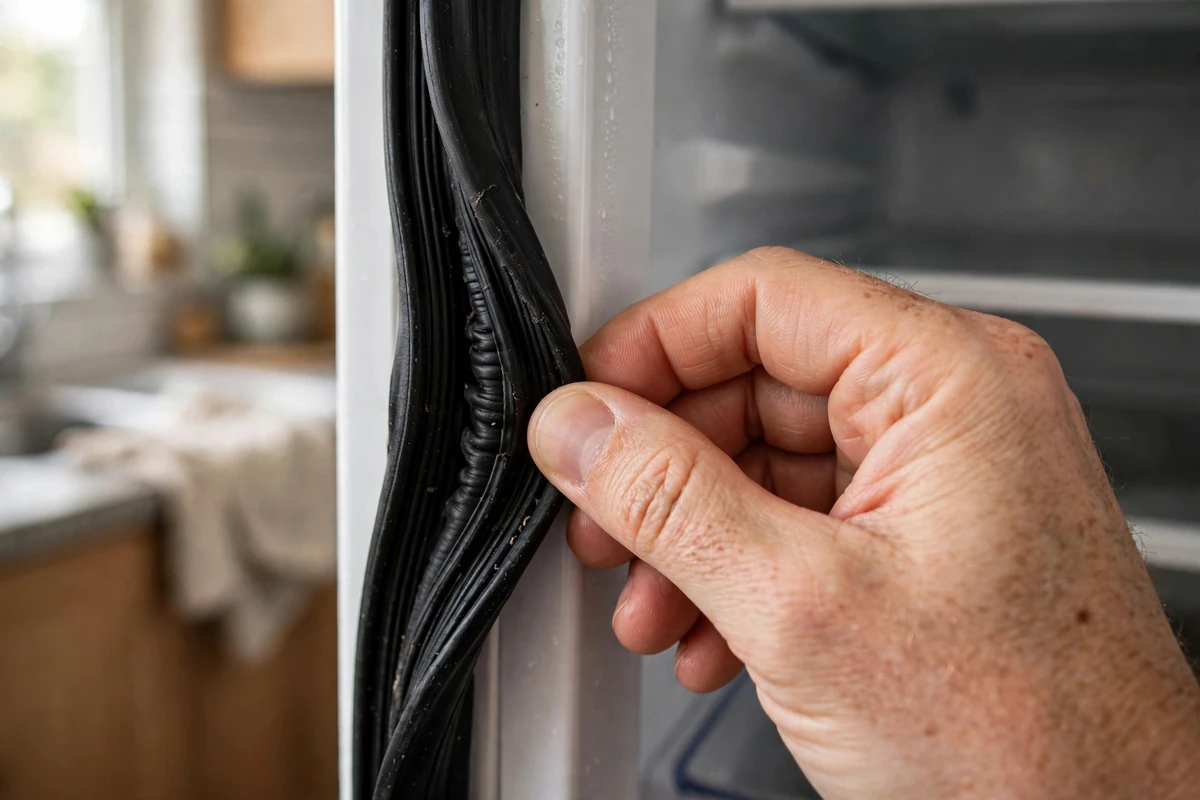
3. Worn-Out Door Seals (Gaskets)
The rubber door gasket keeps cold air in and hot Kuwaiti air out. Over time seals crack, loosen, or collect debris, letting cold air escape nonstop. Test yours: close the door on a banknote — if it slides out easily, the seal is leaking. Fix: Clean gaskets with warm soapy water first. If the seal is torn or warped, replace it; new gaskets are inexpensive, and a technician can fit one in a single visit, instantly improving cooling and lowering your electricity bill.
4. Blocked Air Vents Inside the Fridge
Cold air travels from the freezer into the fresh-food section through small vents. Overpacking the fridge — common before Ramadan or family gatherings — or letting ice build up around the vents blocks this airflow. Fix: Rearrange items so nothing presses against the back wall or covers the vents, and leave space for air to circulate. Ice-blocked vents may also signal a defrost system fault (see cause #8).
5. Refrigerant (Gas) Leakage
Refrigerant — often called Freon gas — is the lifeblood of your cooling system. A leak means there is not enough refrigerant to absorb heat, so the fridge runs constantly but never gets cold. Warning signs include hissing sounds, oily residue near the coils, and a compressor that never cycles off. Fix: Never a DIY job — refrigerant handling needs certification. A technician will locate the leak, seal it, and recharge the system to the manufacturer’s exact specification.
6. Compressor Failure or Overheating
The compressor is the heart of your refrigerator — and the costliest part to replace. In Kuwait it works under exceptional strain: at 45°C+ room temperatures, it must work far harder than designed. Symptoms include clicking sounds, a hot-to-the-touch compressor, or a fridge that runs with no cold air. Fix: Often only the start relay or overload protector has failed — a cheap, fast repair. If the motor itself burned out, a professional diagnosis will tell you whether replacement or a new fridge makes more sense.
7. Malfunctioning Evaporator Fan Motor
The evaporator fan blows cold air from the freezer coils through the fridge. When it fails, the freezer may still feel cold while the fresh-food compartment turns warm — a classic, confusing symptom. Fix: With the fridge running, open the freezer and listen. Many models stop the fan when the door opens, so press the door switch manually to test. A dead fan motor needs replacement — straightforward for an experienced technician.
8. Defrost System Problems and Frost Buildup
Frost-free fridges periodically melt ice off the evaporator coils using a defrost heater, timer, and thermostat. When one fails, thick frost insulates the coils and blocks cold air — you will see heavy ice on the freezer’s back wall. Fix: Unplug the fridge for 24 hours with doors open to fully defrost it; this often restores cooling temporarily. But the faulty component will fail again, so book a proper repair. A freezer that keeps icing up points straight at the defrost system.
9. Overloaded Fridge and Poor Air Circulation
A packed fridge restricts the airflow that distributes cold air evenly. Warm spots develop, the compressor runs longer, and food near the door spoils faster — common in large households that stock up in bulk. Fix: Keep the fridge about two-thirds full, never block the back-wall vents, let hot food cool to room temperature before storing, and avoid leaving the door open — in Kuwait’s heat, every open-door minute counts.
10. Power Supply Issues and Extreme Summer Heat
Voltage fluctuations can damage your fridge’s control board and compressor over time. Placement matters enormously too: a fridge squeezed into a hot, unventilated kitchen corner — or next to an oven — in a 50°C summer cannot shed heat fast enough. Fix: Leave 5–10 cm of clearance around the fridge, keep it away from heat sources, and consider a voltage stabilizer. Standard indoor models are not designed for Kuwait’s outdoor summer temperatures, so never install one in a garage or outdoor kitchen.
Quick DIY Checks Before Calling a Technician
Run through this 10-minute checklist first — it resolves a surprising number of “fridge not cooling” calls:
- Confirm the fridge is plugged in and the circuit breaker has not tripped.
- Check the thermostat is set to 2–4°C (fridge) and −18°C (freezer).
- Clean dust off the condenser coils at the back or bottom of the unit.
- Inspect door seals with the banknote test and wipe them clean.
- Make sure interior air vents are not blocked by food or ice.
- Verify the fridge is level and has ventilation space around it.
- Listen for the evaporator fan and compressor — note any clicking or silence.
If the fridge still is not cooling after a few hours, the fault is almost certainly a failed component — and running a struggling fridge can turn a small repair into a burned-out compressor.
When to Call a Professional Fridge Repair Technician in Kuwait
Call a certified technician immediately if you notice refrigerant hissing or oily residue, a compressor that clicks but never starts, repeated breaker trips, burning smells, or frost that returns within days of defrosting. These sealed-system and electrical faults need professional tools, genuine spare parts, and trained hands.

A professional fridge repair service in Kuwait will diagnose the exact fault — start relay, thermostat, fan motor, or compressor — and fix most problems in a single home visit. Choose technicians who service all major brands, use genuine spare parts, and back their work with a service warranty.
How to Prevent Fridge Cooling Problems in Kuwait’s Climate
- Clean condenser coils every 6 months — dust is your fridge’s worst enemy in Kuwait.
- Service your fridge annually before summer, ideally in March or April.
- Replace aging door seals at the first sign of wear.
- Keep the kitchen ventilated and never place the fridge next to the oven or in direct sunlight.
- Use a voltage stabilizer to guard against power fluctuations.
- Do not ignore early warnings — longer running cycles, strange noises, or slight warming always get worse, never better.
FAQs: Fridge Not Cooling in Kuwait
Why is my fridge running but not cooling?
The most common reasons are dirty condenser coils, a refrigerant leak, a failed evaporator fan, or a faulty thermostat. If cleaning the coils and checking temperature settings do not help, a technician needs to test the sealed cooling system.
How much does fridge repair cost in Kuwait?
Minor repairs like a thermostat or fan motor are affordable; compressor or sealed-system work costs more. Reputable companies give transparent, upfront quotes — always ask for one before work begins.
Can Kuwait’s summer heat permanently damage my refrigerator?
Yes. Sustained 45–50°C temperatures force the compressor to run nonstop, accelerating wear and risking burnout. Proper ventilation, clean coils, and annual pre-summer servicing dramatically extend your fridge’s life.
Do you offer same-day fridge repair across Kuwait?
Yes. Our certified technicians provide same-day, 24/7 doorstep fridge repair across all governorates — including Kuwait City, Salmiya, Hawalli, Jabriya, Farwaniyah, and Khaitan. Call +965 6641 3623 or visit our contact page to book.
Conclusion
A fridge that is not cooling in Kuwait is a race against time — but now you know exactly what to check, what each symptom means, and when to call for help. From dusty condenser coils and worn door seals to refrigerant leaks and compressor faults, most cooling problems are fully fixable when caught early.
Do not let spoiled food and a struggling compressor turn a simple repair into an expensive replacement. For fast, reliable, same-day fridge repair anywhere in Kuwait, trust the certified technicians at نجمه تصليح الأجهزة الكهربائية — genuine spare parts, transparent pricing, and every repair backed by our satisfaction guarantee. Call +965 6641 3623 now, day or night.